Party Board Games That Work Even With “Non-Gamers”
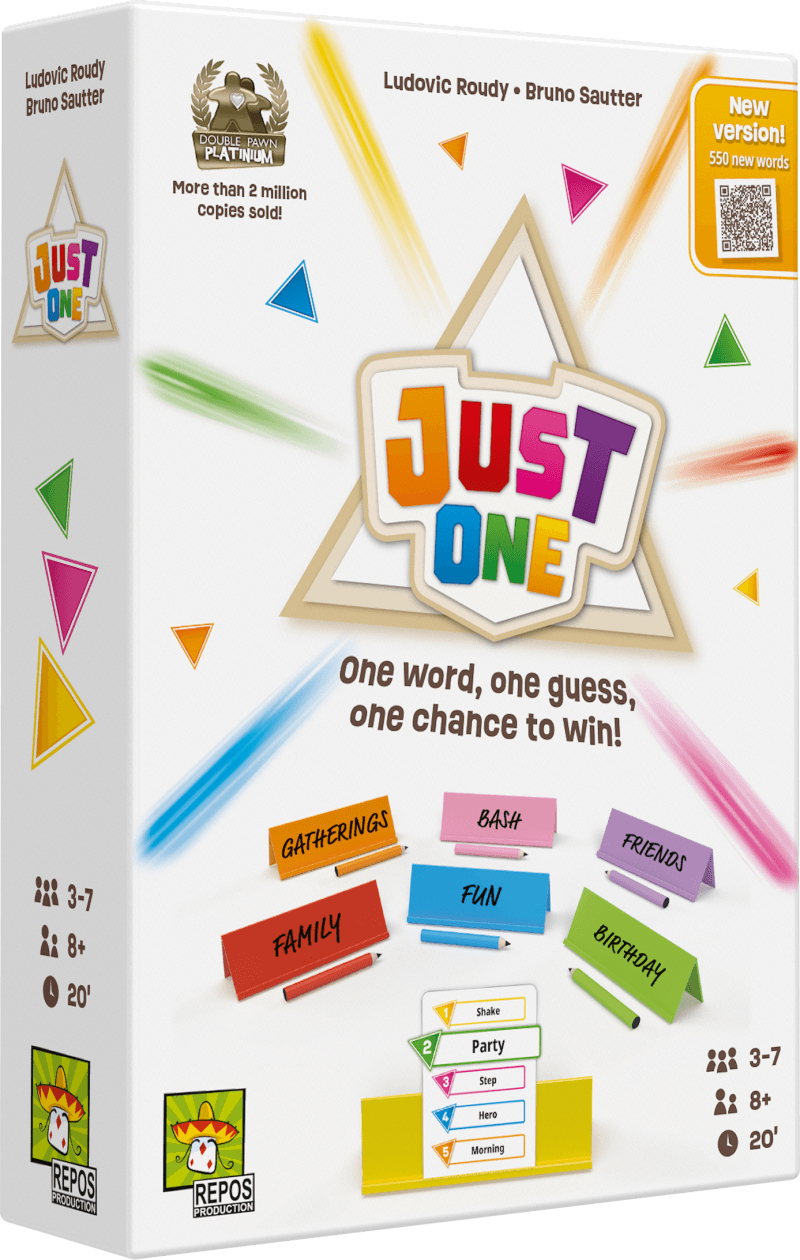
- Best OverallJust One(3-7 players)
👉 One player closes their eyes. A word card goes up — say, "Pyramid". Everyone else secretly writes a one-word clue to help the guesser. Before the guesser opens their eyes, you compare clues. Any duplicates get removed. So if three people wrote "Egypt", all three get cancelled. The guesser only sees the remaining clues. Maybe they're left with "Pharaoh" and "Triangle" and that's enough. Maybe everyone wrote the same thing and they get nothing. That's the whole game. No scoring track, no special powers, no complicated rules. You play 13 cards and count how many the guesser got right. The fun is in the duplicate-cancelling. You want to be helpful, but you also don't want to write the obvious clue that everyone else will write. It creates this tension where you're trying to outthink your own teammates — not to beat them, but to help them differently than everyone else. Works best with 5-7 players. Fewer than that and duplicates rarely happen, which removes the interesting part. It's a Spiel des Jahres winner and probably the single lowest-friction game you can bring to any social gathering.
- Best for StrategyWavelength(2-12 players)
👉 One player — the "psychic" — sees a hidden target on a spectrum between two extremes. The spectrum might be "Hot ↔ Cold" or "Bad Pet ↔ Good Pet" or "Underrated ↔ Overrated". The target sits somewhere on that scale, and the psychic gives a single clue to try and get their team to guess where it is. Then the team argues about it. That's the game. "She said 'Igloo' — that's clearly far to the Cold side." "No, but an igloo is actually warm inside, so maybe it's more centre." The dial gets placed, the answer is revealed, and everyone either cheers or groans. There are no complicated rules to remember, no cards to manage, no turns to wait through. The physical dial component is satisfying — you slide it, lock it in, and then reveal the actual target by lifting a cover. It's tactile in a way that most party games aren't. It's at its best with 6-8 players split into two teams, but it works with any group size. The conversations it generates are genuinely interesting — you end up learning how differently the people around you interpret the same concept. Some groups use it as a warm-up. Others play it for the whole evening.
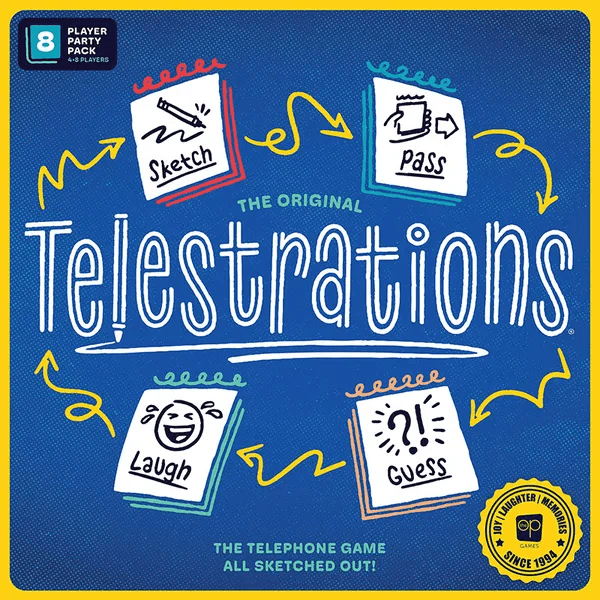
- Great for BeginnersTelestrations(4-8 players)
👉 Think of the game Telephone, but with drawing. Each player starts with a word or phrase. You sketch it in a flip book, pass it on, and the next person guesses what you drew. Then the next person draws that guess. And so on around the table. By the time your book comes back to you, the original word has usually been mangled beyond recognition. "Birthday Cake" became "Hat" became "Sombrero" became "Mexico" became... a stick figure next to a cactus. Then everyone flips through and laughs at where it went wrong. There's no real scoring. The game is the reveal. You're not trying to draw well — you're just trying to be understood. Bad artists actually make the game funnier because their drawings are the ones that derail the chain. It works with 4-8 players (the bigger box does 12). The sweet spot is 6-8, where chains are long enough for proper drift. Each round takes about 5-10 minutes, and most groups play 2-3 rounds before moving on to something else. It's one of the few games that genuinely works with any age and any experience level. Kids, grandparents, people who hate board games — everyone can participate and everyone laughs.
Not sure which one to pick?
Let us recommend the best game based on your group's preferences.
👉 Use the Game Finder🎲 Games in this guide