Hans im Glück • 2000
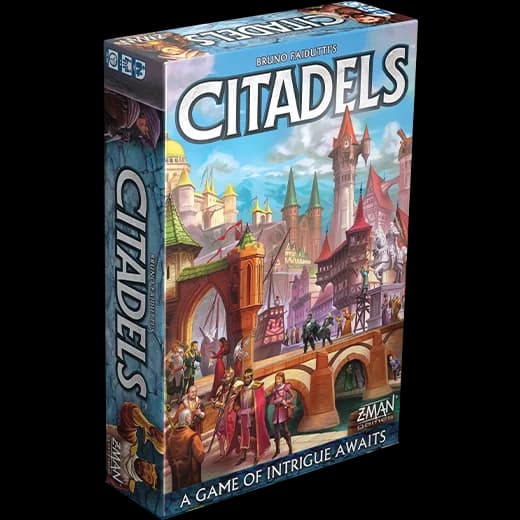
Each round, a set of character cards is passed around the table and each player secretly picks one. Characters have abilities: the Assassin kills a character (not a player — the player who picked that character loses their turn). The Thief steals gold from a character. The Magician swaps cards. The King goes first next round. After everyone has picked, characters are called in order. When yours is called, you take your turn: collect gold or draw cards, then optionally build a district card. Districts cost gold and contribute to your city. First player to build 8 districts triggers the endgame. The game lives in the draft. You're reading what characters other people are likely to pick and choosing accordingly. "Maria needs gold, so she'll probably take the Merchant. I should Assassinate the Merchant." But maybe Maria anticipated that and took the Architect instead. With 2-4 players, it's a tight, information-rich puzzle. With 6-8, the draft is longer and more chaotic — you can't predict as well, so it swings more. The expanded character set (included in the 2016 revised edition) adds 9 alternate characters that can swap in, which keeps the game fresh. Districts come in five colours, and there are bonus points for having all five represented in your city. Some purple districts have unique powers — the Observatory, the Laboratory, the Smithy — that give ongoing advantages. Games run 30-60 minutes depending on player count. It's one of the few strategy games that genuinely works at 7-8 players, though it slows down noticeably above 6. The box is small, the price is low, and there's more depth here than the simple components suggest.
Answer a few questions to find the perfect board game for your group.
👉 Find the perfect game instead# Best Strategy Board Games for Large Groups We've all been there: you have seven people at the table, they are all serious gamers, and som…
# How to Host a Game Night for 10+ People Hosting 10 or more people is a totally different beast than a standard 4-player game night. You c…