Indie Boards & Cards • 2012
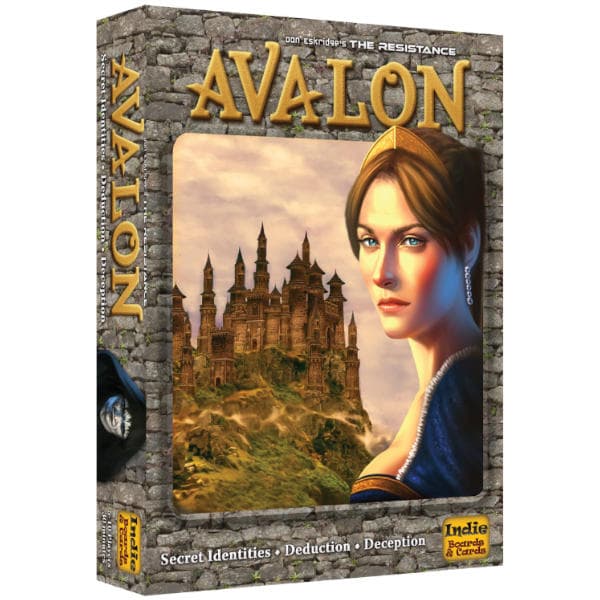
Hidden-role deduction set in Arthurian legend. At the start, everyone secretly finds out if they're loyal to Arthur or a Minion of Mordred. Then you play five missions. Each round, a team leader proposes a group to go on the mission. Everyone votes to approve or reject the team. If approved, the team secretly plays success or fail cards. The loyal players always play success. The Minions can play fail to sabotage missions. Three successful missions and the good side wins. Three failed missions and evil wins. The meat of the game is the team selection and the voting. Who proposed whom, who approved what team, who was on the mission that failed — every decision is information, and the table is constantly arguing about it. Avalon adds special roles on top of the base Resistance: Merlin knows who the evil players are but has to be subtle about sharing that information. Because if the good team wins, the Minions get one final shot — they can assassinate Merlin and steal the victory. Percival knows who Merlin is and tries to protect them. Morgana pretends to be Merlin to confuse Percival. This extra layer makes Avalon feel much sharper than the basic Resistance. The endgame assassination attempt means the good team can't just follow Merlin's lead blindly — doing so paints a target. Plays 5-10. The 5-player game is tight and logical. The 7-8 player game is louder and more chaotic. Both are good. Rounds take 30 minutes and almost always result in someone demanding a rematch.
Answer a few questions to find the perfect board game for your group.
👉 Find the perfect game instead# How to Host a Game Night for 10+ People Hosting 10 or more people is a totally different beast than a standard 4-player game night. You c…
# Best Social Deduction Games for Big Groups If your group is growing past the six-player mark, social deduction games are often the first …